
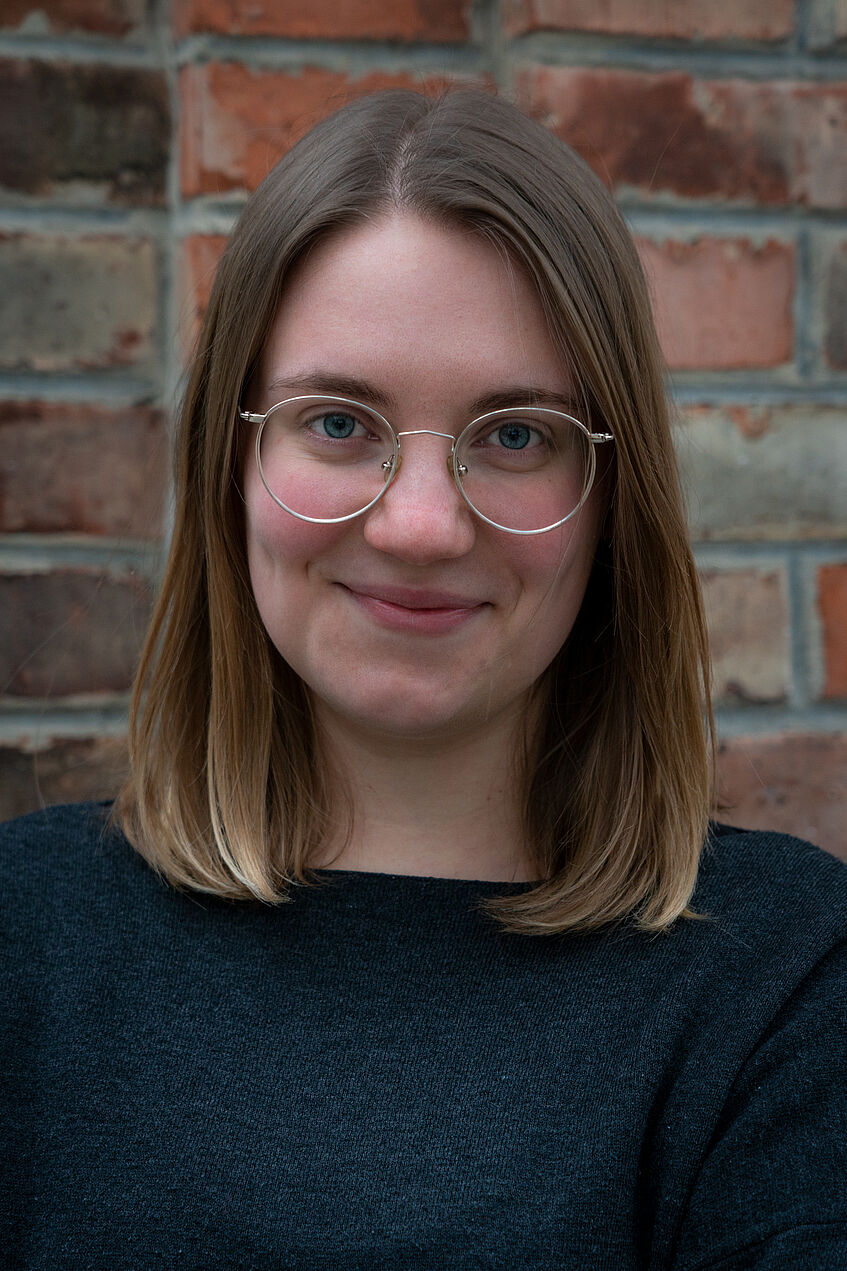
Arabella Mühl, MSc.

Universitätsstraße 7 (NIG)

1010 Vienna

Room: D0606

arabella.muehl@univie.ac.at


Research interests

Stress and strain at work, health and well-being of employees in flexible working environments, working hours and alternative working time models (e.g. 4-day week)

Curriculum Vitae

Arabella has been a research assistant in the Department of Work and Organizational Psychology since September 2021. She completed her doctorate in 2025 at the University of Vienna with her thesis “So much for flexibility: Compulsory work from home during the COVID-19 pandemic and employer-mandated schedule changes”.

In addition to her work at the University of Vienna, Arabella has been working as a project assistant at the Vienna University of Technology (Institute for Management Sciences) since 2025.

Previously, she worked as a project assistant at the Vienna University of Technology (Institute from Management Sciences). She completed her master's degree at the University of Vienna (psychology, specializing in work, economics and society) and holds a bachelor's degree in English and American Studies.

Publications

Showing entries 1 - 5 out of 5
Mühl A, Hartner-Tiefenthaler M. Cognitive and Affective Irritation During Times of Crisis: A Latent Change Perspective on Their Differential Relationship With Health, Sleep Quality, and Satisfaction. Zeitschrift für Arbeits- und Organisationspsychologie. 2025;69(2):1-14. doi: 10.1026/0932-4089/a000441

Mühl A, Korunka C. You get what you expect: Assessing the effect of a compressed work schedule on time pressure, fatigue, perceived productivity, and work-life balance. European Journal of Work and Organizational Psychology. 2024;33(5):703-711. Epub 2024. doi: 10.1080/1359432X.2024.2379061

Mühl A, Hartner-Tiefenthaler M, Feuchtl S. The implication of overtime for well-being and desired working hours among office workers: The role of temporal flexibility. Momentum Quaterly. 2023;12(1):43-64. doi: 10.15203/momentumquarterly.vol12.no1.p43-64

Mühl A, Feuchtl S, Hartner-Tiefenthaler M. Wie viel Zeit für Erwerbsarbeit? Eine Analyse der Wunscharbeitszeit österreichischer Arbeitnehmer*innen unter Berücksichtigung von Geschlecht und Kinder. 2021. Paper presented at Momentum- Kongress 2021: Arbeit, Hallstatt, Austria.

Showing entries 1 - 5 out of 5